
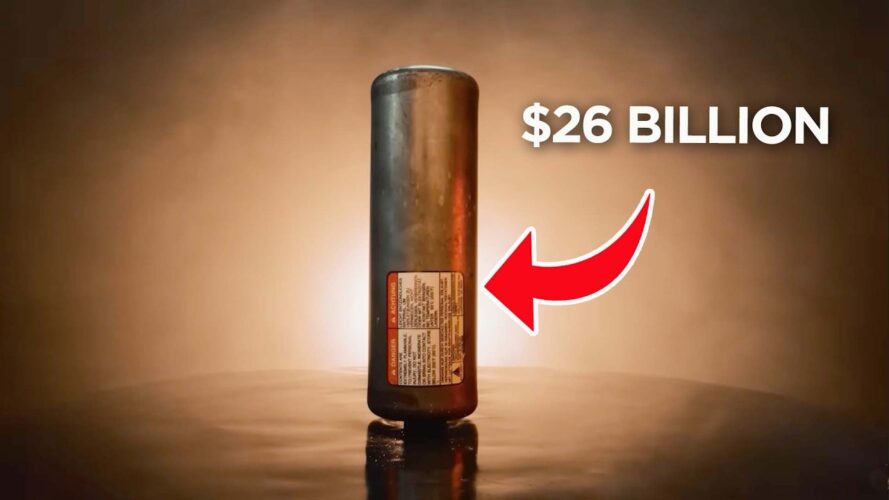
Corporate America is full of stories of recalls from products that have injured or killed consumers, but none can touch the scope and cost of the Takata Airbag Recall. After making the decision to use aluminum nitrate as the propellant in their airbag inflators, multiple people have been killed and hundreds injured by exploding airbags that throw metal into people’s faces. But as we talk about in today’s video, that is just the beginning of the story.
TRANSCRIPT:
On May 27, 2009, 18-year-old Ashley Parham of Oklahoma City, Oklahoma, an all-state cheerleader who just graduated from high school was picking up her brother from football practice in the family’s 2001 Honda Accord. She bumped another car in the school parking lot and for some reason, the airbag deployed. Unfortunately, the medical examiner said something sliced open her carotid artery causing her to bleed out and die.
Her injuries were so bad and her bleeding was so profuse that emergency-room doctors thought she might have been shot. It wasn’t until they found metal fragments in her neck that they realized the airbag was the thing that killed her.
And this wasn’t a major accident or even a minor collision. She accidentally bumped into another car that we probably all did at one time or another when we just learned how to drive. The Police Chief Brandon Clabes even told reporters that Ashley’s accident was one “that most people just walk away from with no injuries at all.”
How did the airbag, a major breakthrough designed by engineers and automotive experts to save lives in serious car accidents, become the thing that ended her life? Well, it wasn’t just the airbag. It was a series of deadly choices and greedy decisions that would cause even more deaths and injuries. It would also lead to the biggest and most expensive recall and design flaw in automotive history.
Takata’s negligence is stunning all by itself, but it’s jarring given its extensive history in improving car safety.
Takezeo Takata founded the Takata Company in 1933 as a textile manufacturer in Shiga Prefecture.
The company originally made lifelines for parachutes during World War II before shifting to manufacturing seat belts in the early 1950s. The company sold the first two-point seat belt design in 1960.
Japan conducted its first seat-belt crash tests in 1962 and the following year, it built a dynamic test facility to test Takata’s seat belts in real-world conditions. Takata started mass producing seat belts for cars across the country before its massive move into manufacturing airbags.
The earliest designs for airbags inflated with compressed air into fabric cushion. In 1964, Japanese engineer Yasuzaburou Kobori (Ya-su-za-boo-roh Ko-bo-ri) patented a design in 1964 that used chemicals instead of air to inflate the bag. Unfortunately, neither of these could inflate fast enough at the time of the collision to prevent any serious injuries.
Two years after Congress required automakers to put seat belts in all vehicles, Allen K. Breed invented the sensor and safety system that led to the first electromechanical airbag for cars.
There were other patents for airbags filed as far back at the early 1950s but Breed’s was the first that could detect crashes in time to deploy them.
Then in the 1970s, Takata designed one of the first airbags known as a passive restraint system. The company’s designs participated in the US National Highway Traffic Safety Administration crash tests to test their effectiveness. Takata was the only company out of six that volunteered to participate in the study to clear the 32.3 mph standard.
So Takata started to shift its research towards this new system of air safety bags. By the mid-to-late 1980s, the company supplied airbags to American cars including 800 airbags to public institutions like vehicles for police officers.
By the mid-1970s, several major car makers started installing airbags in some of its models. Ford built its own experimental airbag and General Motors installed them into its fleet of 1973 Chevrolet Impalas for government use.
The same year, the Oldsmobile Toronado became the first commercially available car to offer a passenger side airbag. GM called it the “Air Cushion Restraint System.”
GM also started to offer driver-side airbags in its full-sized Oldsmobiles and Buicks before removing the option entirely in 1977 due to a lack of interest. Ford and GM would actually spend the next seven years lobbying against measures that would require installing them as standard options in its cars.
Then Ford started offering them again as an option on its 1984 Tempo and Chrysler made them a standard feature in its 1988 and 1989 models.
By the 1990s, the majority of American cars came with airbags before they became a mandatory feature in 1998. Congress passed the Intermodal Surface Transportation Efficiency Act requiring all new cars and light trucks to come with airbags on both sides of the front seats.
The modern airbag is made of thin nylon that folds in the steering wheel and passenger side dashboard as well as the seat and the doors.
The bag can inflate as fast as 200 mph and it deflates through tiny holes in the bag to create a cushioning effect. Otherwise, it would feel like getting punched in the face or you’d bounce off of it and hit the back of your head with your seat where you’re at risk of sustaining more serious brain injuries.
It’s similar to those giant airbags they use on stunts in movies. Like the one that Mel Gibson jumps off of while handcuffing himself to a guy in “Lethal Weapon.”
The vents on the side of the giant airbag cradles and prevent the fall become dangerous. Otherwise, they would just bounce off the bag and that scene would be WAY more entertaining than it already is.
So what made Takata’s airbags so dangerous? Did someone forget to poke holes in the airbag or something? It has to do with a substance called ammonium nitrate.
You don’t have to be a chemistry expert or even an amateur gardener to recognize the term. If you’ve watched the news all over the past 30 years, you’ve definitely heard of it.
Ammonium nitrate is a salt made up of ammonia and nitric acid that has a wide variety of uses but it’s mostly found in fertilizers and explosives…aaaaaand I’m guessing that you’re starting to see the problem.
And no, the problem isn’t that it made the airbags smell like farts. If that was the case, then I’d understand why they wouldn’t poke holes in the bags.
Yes, that’s a cheap joke that allows us to use the word “farts.” But it’s also not far off the real reason why a company with a 20 percent share of the global airbag market would decide to use an explosive compound in its product, one they knew was explosive and dangerous.
Back in the 1990s, airbag manufacturers realized that sodium azide produced toxic fumes. So they replaced it with a compound called tetrazole but that also produced toxic fumes after the airbag deployed and it cost a lot more money.
Takata bought up a bunch of companies to basically obtain their patents. Some investigators looking into these faulty airbags found that one of those purchases included a rocket research facility in Moses Lake, Washington that worked with ammonium nitrate for years. Paresh Khandadhia, the company’s VP of inflator development, re-tweaked one of those patents to create what he called “high gas yield non-azide gas generants” and pushed ammonium nitrate into production for their airbags.
Here’s how airbags work in a nutshell. A crash sensor located in the steering column activates the inflation system that deploys the airbag using nitrogen gas instead of compressed air. When a collision occurs, an accelerometer built into the microchip of the sensor triggers the inflation system that releases sodium azide and potassium nitrate that creates the nitrogen gas hot enough to inflate the whole bag.
The whole inflation system is like a solid rocket booster built into the column of the car’s steering well, except instead of sending a rocket in space, it sends a giant bag into your body and face cushioning the blow of the collision.
Back in the 1990s, airbag manufacturers realized that sodium azide produced toxic fumes. So they replaced it with a compound called tetrazole but that also produced toxic fumes after the airbag deployed and it cost a lot more money.
So since Takata owned this new patent for its inflators, the company decided that ammonium nitrate was the best solution for their product.
Ammonium nitrate-based propellant worked more efficiently than other gases so they could use smaller inflaters to blow up the airbags. Ironically, it was also safer to manufacture.
Ammonium nitrate was also cheaper at the time and didn’t emit anything more dangerous than carbon dioxide gas into the atmosphere…and yes, we know about the harmful effects of carbon dioxide, but let’s stick to one corporate outrage at a time, please.
So what are the disadvantages of using ammonium nitrate? Well…
Those were clips from the 2020 Beirut port explosion, the West Fertilizer Company factory explosion in West, Texas in 2013 and the bombing of the Alfred P. Murrah Federal Building in Oklahoma City in 1995. All three of those horrific tragedies were caused by the accidental and, in the case of the latter, intentional ignition of tons of ammonium nitrate.
Ammonium nitrate is also responsible for the worst industrial accident in US history. In 1947, a tossed cigarette started a fire on a ship carrying 2,300 tons of the stuff packaged in paper bags. The blast killed over 500 people. When the ship exploded, the blast was so powerful that it knocked down people on land from a distance of 10 miles away.
Yeah, they put that stuff in the housing to inflate airbags. That sounds like something Wile E. Coyote would use at the end of Road Runner when he’s at the end of his rope and just stuffing explosives into a pile of bird seed and you’re watching this and just know that somehow, it’s gonna blast him into space.
The truly sinister part of the story is that the company knew about the explosive and volatile nature of ammonium nitrate.
Hell, anyone who’s watched CNN or any movie where a strip of film is used to create a massive explosion like the one in “Inglorious Basterds” could figure out this chemistry word problem.
OSHA requires companies who make the stuff to store it in buildings with noncombustible flooring that either have good ventilation or can be made self-ventilating in the case of a fire. So the nitrogen oxide and other hot gases it produces doesn’t build up and, you know, cause an explosion.
Takata executives knew about the issue because they had a quality control team of engineers investigating the problem, telling them it was dangerous. One of the investigators even witnessed the carnage one of the exploding inflators could create. Airbag inflator engineer John Kelly who helped conduct internal investigations of Takata’s airbags that used ammonium nitrate heard an inflator explode in another testing room in the plant where he worked. He said 30 seconds later, a technician ran into their office to tell them a technician was injured while simulating a truck fire.
Tests like these for airbags are key because they have to be able to maintain their stability in different temperatures and not just if the car is on fire from an accident. It has to survive day to date temperatures from the seasons and even while sitting outside overnight. When a propellant like ammonium nitrate is put in the canisters, it can create too much energy until the metal housing just can’t take it and the whole thing explodes.
So you’ve basically got grenades sitting in the steering wheel columns of cars.
Takata also had to know about the problem because they started putting dessicants in the propellant to help maintain the moisture from degrading it during changing temperatures. Desiccants are those drying agents you sometimes see in packages or the pockets of new clothing with warnings printed on them that it’s not something you should eat.
That means someone out there is still eating these things. On behalf of humanity, stop. They are not breath mints. They don’t even look like a type of candy anyone would eat. They should make them look like licorice jelly beans…
Oh, wait, I like those.
So Takata tries to put a Band-Aid on the problem and call it a day. Why would they do that? Well, they have inexperienced people in charge pushing through a new piece of technology that’s not ready even though it’s been thoroughly inspected and tested. They are running a major, multinational corporation that owns smaller companies and a patent on a product that’s about to go into millions of cars, and they have stockholders and customers to answer to at the end of the day. You can probably guess what they did next.
Instead of admitting to a mistake and fixing a problem that could actually injure or even kill people, they plowed ahead with their plans to install these dangerous airbags, and closed down the lab and the plant investigating the problem. The people who tried to warn them about the problem had no choice but to leave the company.
From 2000-2008, Takata provided airbags to some of the biggest automakers in the world and they are installed in over 70 million cars.
Then in 2009, the first death caused by a Takata airbag is reported. And sadly, it won’t be the last.
The following year, three Takata airbags ruptured in Honda vehicles.
Then, sadly, on May 27, 2009, 18-year-old Ashley Parham of Oklahoma City, Oklahoma became the first person killed by one of Takata’s faulty airbags.
Parham’s death prompted Honda to issue a recall of 500,000 airbags in its vehicles.
A few months later, the National Highway and Transportation Safety Association finally gets involved, but their investigation is limited to Honda’s vehicles and their airbags and only found that the automaker acted responsibly.
The NHTSA wouldn’t focus its investigative eye on Takata until 2014, following two additional deaths caused by flying shrapnel in simple car accidents.
Takata didn’t seem very eager to participate in the investigation. The NTHSA had to issue a $14,000 per day fine against the airbag maker for every day they failed to respond to information requests.
Then after the 10th reported death caused by an airbag, Takata caved and hired for Transportation Secretary Samuel Skinner…
…to lead a panel investigating the company’s handling of its airbag safety protocols. The panel found Takata had no quality control procedures or safety testing standards. It’s also the first time that Takata was officially blamed for releasing its faulty airbags.
So, a company that knows it didn’t have any safety tests in place for airbags spends even more money hiring a company to tell them something they already knew.
Meanwhile, more and more car models are being recalled after the airbags cause more injuries and deaths, prompting Takata to issue a thorough recall of 35-40 million inflators.
Sadly, this wasn’t the only carnage caused by Takata.
In fact, getting the airbags out of the cars and out of harm’s way was just half of the problem.
Now that millions of drivers are responding to the recall, something had to be done with the Takata airbags being taken out of the cars.
The problem is there was no real solid plan to deal with these airbag inflators that were still ticking time bombs being transported on roadways around the world.
The Environment Protection Agency issued an interim rule expediting the removal and disposal of Takata’s explosive airbag inflators.
It includes a “conditional exemption” from the Resource Conservation and Recovery Act that set hazardous waste requirements for removing and disposing airbag modules and inflators from cars.
There were so many of these dangerous Takata airbags on the roads that efforts were made to expedite their removal. The EPA basically exempted dealerships, repair shops and facilities, and car salvage and scrap yards from transporting these airbags to designated waste collection facilities that could properly handle and dispose of them.
The problem is that most semi-trucks, especially those that ran on diesel, were prepared to transport tons of defective airbags filled with ammonium nitrate inflators.
The average semi-truck isn’t fortified to contain an explosion just one of these inflators and they are transporting tons of them from dealerships and other places where drivers are responding to the nationwide recall.
John Kelly, one of the Takata engineers who tried to warn the company about the explosive airbags only to have his lab shut down by executives, heard about the recall and worried that all of these defective airbags with ammonium nitrate are just being shipped back to the companies for disposal like any other car part.
He visited some dealerships he knew had responded to recalls and found they were just being placed in cardboard boxes, wrapped in plastic and placed on palettes for Fedex trucks to pick them up and deliver them back to the car maker.
These are hazardous materials being shipped around the country on public roadways with no HAZMAT warnings or signs on the vehicles.
The trucks themselves also can’t withstand the blast because if one of them goes off, the extreme and sudden temperature change could trigger an exponential amount of explosion. We’re talking about some vehicles carrying around five times the number of explosive materials that Timothy McVeigh used in the Oklahoma City bombing.
Kelly contacted the Department of Transportation to try and get someone to listen to him about reclassifying these materials as Class 1, the designation needed for transporting explosive materials because, as we’ve already seen, these things explode. Stuffing them in a FedEx box isn’t going to protect them if anyone if they go off.
Eventually the Senate Commerce Committee contacted him to talk about the issue but when he followed up to talk about conducting tests to prove their Class 1 designation, he was told there was no money to do it.
Yes, he told the government didn’t have $10,000 to spare to do a simple test. So he started scrounging airbags from salvage yards, wholesalers and even brick and mortar stores at his own expense to conduct his own tests.
He also had to buy something to produce enough heat to test the airbag individually. So he bought toaster ovens. No, he’s not trying to MacGyver this test on his own. This is how the industry tests inflators because if something as simple as a Cuisinart can set them off, then they can’t withstand the day-to-day temperature change of a car. That’s right. The device you use to reheat Hot Pockets are the same one the car industry uses to test the effectiveness of airbag inflators.
He even tested them by heating the Takata inflators in smokers and they exploded in a matter of minutes. The explosion turned the lid of a smoker into a charred, twisted piece of unusable metal.
Now just imagine thousands of these devices in a basic semi-truck with no ventilation or heat control. Once again, you can probably guess what happened next.
On Aug. 22, 2016, a truck operated by a Takata subcontractor exploded while driving through the town of Quemado, Texas. The explosion leveled the house of Lucila Robles who died in the explosion. Once again, Takata insisted it had “strict safety procedures relating to the transportation of its products” when it clearly didn’t.
On Feb. 27, 2017, Takata pleaded guilty to multiple criminal charges for releasing its airbags and trying to cover up the knowledge that they knew they were dangerous. The company agrees to pay $1 billion in criminal penalties, including $125 million in restitution for the victims and their families and $850 million in compensation for the automakers for whom it provided airbags over the years. Takata filed for bankruptcy in 2017.
Toyota, Mazada, Subaru and BMW alone agreed to a consumer settlement of $553 million in the same year, which just opened the door for millions more in other settlements from other carmakers and manufacturers.
Over 67 million airbags had to be recalled from 34 different carmakers. The exploding airbags have been attributed to the deaths of at least 30 people around the world, including 24 people in the US, and an untold number of injuries.
On Feb. 27, 2017, Takata pleaded guilty to criminal charges for releasing its airbags and trying to cover up the knowledge that they knew they were dangerous. The company agreed to pay $1 billion in criminal penalties, including $970 million in compensation for the victims and their families, as well as to the automakers for whom it provided airbags over the years. Five months later, Takata files for bankruptcy.
Three of Takata’s Japanese executives were indicted on wire fraud and conspiracy charges for trying to conceal information about the defects in the inflators. Investigators uncovered emails in which they admitted to filing false reports even after they learned their inflators were causing injuries. Prosecuting those cases would require extraditing them to the US, and according to court records, it appears those cases are still ongoing.
The truly alarming part is that those defective airbags could still be out on the road. Yes, a lot of them probably ended up in landfills and scrapyards but you could be still driving one and not even know it. Even after all the revelations and recalls and tests, there’s still a chance they could be out there on the road posing a risk not just to the people in the car but other drivers on the road.
The NTHSA has released a list of cars that you should not drive until you get them repaired. There’s a link in the description.
The majority of cars with those airbags span from the late 1990s to the mid-2010s.
You can also check if your call is one of those affected by the Takata recall or any nationwide recall simply by providing your license plate or VIN number to a special database on the NTHSA, which I’ve also placed a link below in the description.
So, what’s the big lesson here? Other than maybe we shouldn’t put explosive materials in things that we use pretty much every day?
The real failure is that no one listened to the experts until it was too late. People without the right experience wanted to make their mark on the world or just make money and it cost people their safety and even their lives.
So I guess the lesson is if you’re one of those people in power, maybe…don’t do that?
I didn’t say it was a deep lesson. I just said it was a lesson.


Add comment