
We are currently running through vital Earth resources at a rate of 1.7x what the Earth can renew. Meaning at some point, we’re going to run out of some things. Today we’re going to talk about the resources we’re burning through faster than we can replace, and what the world of the future will look like without them.
TRANSCRIPT:
July 30, 2026 was Earth Overshoot Day. This means that all of August, September, October, November, and December is in the red, ecologically speaking. See, the world burns more resources than its biocapacity can produce, using the equivalent of 1.7 Earths’ worth of those resources each year.
We would literally need .7 of another earth to renew all the stuff we consume, which is troubling when you think how many earths we actually have. Earth Overshoot Day is meant to remind us that we’re borrowing time. Specifically, we’re borrowing August through December of this year from the future, and as of right now, we can’t pay it back.
We can’t keep doing this. Mathematically, we can’t. The resources of our global society are running out.
The politics of this mathematical fact are messy, as the lifestyles that some countries enjoy are more resource heavy than others. And yet, on a certain level, the politics don’t matter. No matter who’s to blame, we’re still going to run out of resources unless we, as a planet, change our use habits.
Will we make that change?
Eh? The good news is we can try, because every eco-overuse problem out there has a solution.
Of all the solutions highlighted by the Earth Overshoot people, my favorite has got to be fighting overpopulation with endangered species condoms. ”When you’re feeling tender, think of a hellbender.” Slow clap — slow clap for the environmentalist who came up with that.
Look, I know there are a lot of different opinions on climate issues. The fact remains that some of the foundational resources of our society are under threat. If we don’t make serious changes to how we use them, they’re not going to be here for the next generation.
What are those resources and what will losing them really mean for us and the kids? I can’t answer those questions for every flagging resource on the planet. But I can fall back on a tried and true method of every deeply concerned science YouTuber ever and give you my Top Five.
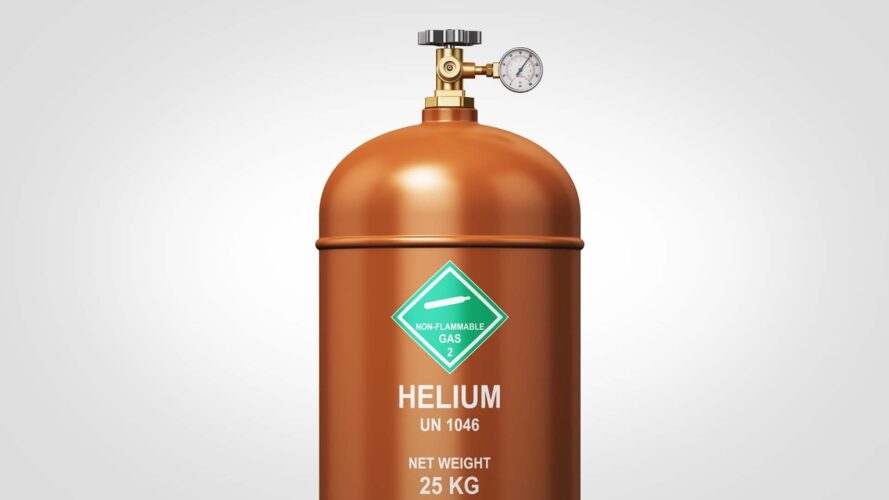
Helium is one of the most common elements in the universe. Having an atomic number of two means it has two protons in its nucleus, just one more than hydrogen, the most abundant element. Yet helium is scarce on Earth.
There are an average of 5.2 units of helium to every million units of air in the lower atmosphere. This qualifies helium as a trace gas, as in “there’s barely trace.” High up in the atmosphere, this changes, with helium being the most abundant neutral gas at an elevation of 500 miles, or 800 kilometers.
Of course, the atmosphere up there is pretty thin. The International Space Station orbits at 255 miles (400 km), so it’s not like you can float up to the helium in a blimp. Modern blimps and other consumers of helium, in fact, are typically supplied by underground sources brought up while drilling natural gas.
With this source in mind it should come as no surprise that most of the world’s helium supply is held by wealthy, gas-producing countries. The Persian Gulf nation of Qatar controls about 30% of the supply and they trade it through the Strait of Hormuz. This is one of the reasons that the blockades of the strait that started earlier this year were a huge deal.
The world needs helium, and being cut off from a third of what was available sent prices through the roof. But why do we need helium, exactly? It’s not just for blimps and party balloons, I can tell you.
In fact, helium has extensive applications in medicine, technology, and industry. Asthma and bronchitis patients, for instance, are treated with helium. An even more prominent medical use is in MRI machines.
The magnets in MRIs get hot and the state-of-the-art coolant they use is liquid helium. This is go-to example you’ll find if you search “helium in medicine” online, and for good reason. Currently, MRIs account for 20% of global helium usage.
Mind you, the other 80% is important, too. Helium is critical to the production of fiber optic cables, computer chips, and hard drives. It used to clean rocket tanks, fill airbags, and act as a shield gas in advanced welding.
One of the most valuable overlooked uses for helium is in finding leaks. Marine craft, spacecraft, and all sorts of scientific instruments are checked for leaks by filling them with helium. The helium atoms are small so they find tiny leaks in applications where a tight seal is critical.
And that’s the refrain you hear again and again with helium. It’s a critical part of most of its use-cases. Which is why it’s troubling that the supply line is so fragile.
The Strait of Hormuz disruption caused a semiconductor crisis. South Korea is a leading supplier of chips that make use of semiconductors and they are twice as dependent on Qatar helium as the rest of the world. The South Korean stock market took a big dip in the crisis, several products got delayed, it was a mess.
And remember, there was helium in existence at the time, it just couldn’t get out to sea. What’s going to happen when the helium runs out? That it will is due to helium’s unique properties.
It’s incredibly light, so once released to the air, it floats to the ISS, flips the birds with its electrons, and is gone for good.
Efforts have been made to recycle helium and curb its non-critical use but these may not be enough.
The long term prospects for helium depend on conservation. Demand is high and there are only so many deposits to tap. Also, and this is important, we can’t make more helium using chemical processes.
Helium is an element, not a compound, and so to make it in bulk, we would need to use nuclear processes to decay other elements down. That’s hugely expensive and infeasible in bulk. As an alternative, we could stick electrons, protons and neutrons together to form helium, but not until we master nuclear fusion.
Experiments are ongoing and shouldn’t take long. As we’ve been told countless times over the past eighty years, fusion is just around the corner. It’ll take another ten years, tops.
This next one is obvious. With all the talk of getting the world off petroleum to fight climate change, it’s easy to forget that whether we want it to or not, petroleum supplies are going to run out. It takes millions of years to mash organic matter into petroleum, but we’re burning through it at a rate that finish the supply in decades.
Back in in 2019, petroleum supplied 40% of the energy consumed in the world. Consumption is up since then, so if the percentage has fallen it’s not by much. Current estimates say that if we go on burning petroleum at this rate, the known supply will run out in about 50 years.
2076 is a ways out for guys who get regular prostate exams in the hope of making it that long. But a kid born today will be in the prime of life then. He’ll probably be using his PhD to prompt the robo-janitor at a data center but let’s not get into that.
Point is, the world’s energy habits will have to change in the next fifty years. Even before the last oil well shuts down, petroleum will become rare. In the time it’s taken for Star Wars to give us Luke, Jar-Jar, Rey, and Pablo Pascal’s mustache, running a car or a generator on petroleum is simply going to be too expensive.
Thankfully, EVs and solar powered batter systems are here to replace those uses. Despite resistance from the petroleum industry and some of the public, the green energy revolution is well underway. But here’s the thing: even if we replace all the energy from petroleum with renewable sources, we’ll only have solved part of the problem.
The big change that is going to have to kickoff in the next half-century is replacing all the plastic. Much of the world’s plastic is petroleum-based, in case you didn’t know. The Strait of Hormuz closure — actually closures, plural, since we’ve got plastics data on more than the first one — shone light on just how much this matters.
At the same time that crude oil prices slightly exceeded their three year-peak because of the blockades, the price of plastic resin nearly doubled. Like with the whole South Korean helium thing, this is because plastic producers depend more on Strait of Hormuz petroleum than other industries do. And again, the threatened resource existed throughout the crisis, it just couldn’t get to factories.
The price spike was nothing compared to what we’re likely to see over the next fifty years. Well before petroleum is gone, plastic is going to move away from being a commodity. It’ll be a luxury we’re eager to replace, which thankfully we can do.
It’s possible to live without plastic. People did it for most of history. Glass is a good substitute in some cases, although its global supply is not without problems, as we’ll get into.
There are bioplastics, too, despite the plants they’re made from also being prone to shortage over the next century. In the end, replacing plastic will really come down to changing how we live. Plastics have molded our habits as much as they’ve molded our industries in the decades they’ve been around, so to ditch them will take a cultural effort.
I’d like to believe we’re in the middle of that effort now, though granted the progress could have been faster. The world has known the end of petroleum was coming for at least 53 years. Back in 1973, the news that several countries had reached peak oil production caused widespread panic.
Now, this is a complicated subject. To really grasp the “peak oil” crisis we’d have to discuss trade imbalance and the political tension of the late 1960s and early 70s. The Cliff’s Notes version is that West Germany, Venezuela, Iran, and the US all reached the peak of their oil extraction capacity within eight years of each other.
At around this same time, OPEC implemented an embargo of countries that supported Israel in the Yom Kippur War. This caused a heating oil shortage. The fact a shortage could happen when everybody was pumping all the oil freaked people out.
Luckily for all the affected countries, OPEC likes money, so they calmed down after a while. But if you’ve ever wondered why boomers fight so hard to hold on to petroleum as an energy source, the winter people froze because it went away is part of the answer. Let’s hope we can roll out enough renewable energy that nobody has to repeat their trauma.
Alright. Let’s get back to elements. Helium isn’t the only one at the Apocalypse party, after all.
The World Economic Forum hosts an excellent chart made by the European Chemical Society. It shows the threat level of the 90 natural elements found on Earth as well as 2 that are mostly synthetic. While looking at this chart, I was surprised to find out that lots of metallic elements are close to being used up.
Let’s take a broad look, first. You can see helium in the top right corner of the chart. It’s colored red, or kind of a dark orange, to indicate a serious threat level.
Other threatened elements including Arsenic, Germanium, and Tellurium, are classed as metalloids, meaning they have some metallic properties. The true metals on the list are Silver, Gallium, Hafnium, Indium, Tantalum, Strontium, Yttrium, and Zinc. Let me hit that last one again: zinc.
If zinc being an endangered element doesn’t scare you, it’s probably because you don’t know what’s holding up your house. This is a galvanized nail. It’s made of steel, but you see that matte finish?
That’s zinc. Zinc is used to galvanize steel, which protects us from rust. Imagine the nails in the walls around you rusting, the nails in the ceiling rusting, too. The wood around you shrieks as the rusty nails shatter and the world comes crashing down on your head!
OK, that might be an exaggeration, but zinc is important. Thankfully, research shows that zinc probably won’t be the first threatened metal to go extinct. There have been shortfalls in the supply but some of these, at least, are down to politics.
There is a considerable stockpile of zinc in China, enough to supply the world for decades. Decades is not centuries, but this still beats earlier predictions. At one time experts thought all the zinc used in galvanization, electronics and brass-making, for crying out loud, would be gone by 2037.
Modified estimates say zinc will almost certainly be around past the 2030s. But over the next hundred years, it could still run out. Of course, we’ll have fusion by then, right?
Looking at the other threatened metals and metalloids: Silver pops up on multiple lists of elements we’ll tap out in under a hundred years. An increase in industrial demand is driving the depletion of silver at a pace that could mean we dig the last of it around 2045.
After that happens, there will be another twenty years of reserves to burn through and then poof, no more silver. Recycling silver is possible, of course. There’s plenty of jewelry that could be remade into photovoltaic cells.
On the “never heard of it” side of endangered metals is indium. Though it’s not a household name, there’s a good chance you’re interacting with indium right now. It’s the “I” in ITO — indium tin oxide — and if you’re using a capacitive touchscreen, it’s the capacitive part.
ITO is a transparent material that sits over or under the glass on your screen. Which one varies, but regardless, ITO is what responds to your touch. Without indium, current touchscreens won’t work, and since almost all the world’s indium is a byproduct of zinc mining, supplies are getting tight.
Like with zinc, politics has made it tighter. 57% of indium is produced in China. Which I guess means that another trade war with them could be great for Blackberry.
You know, this is not worth worrying about. Even if indium went away tomorrow, there are alternatives to using ITO in touchscreens. A researcher at the University of Sydney announced a solution way back in 2021.
There’s this new, high-tech coating that can totally replace ITO. All you need to make it is glass and tungsten and silver… BLEEP!
This is actually worse than it sounds because in addition to indium and silver being scarce, most of the world’s tungsten is a pawn for China to play with. I’m going to skip the details because tungsten isn’t really endangered, just uncommon. But glass? We need to talk about glass.
Glass is super recyclable. It’s one of the things we’re good at recycling. And that’s good because if we weren’t, we’d almost certainly run out of glass in the next 100 years.
Glass, as you probably know, is made of sand, and it turns out that the good kind of sand, the kind you can makes stuff out of, is going away. It’s going away fast. That means no new glass and no new silicon, the semi-conductive element used to make computer chips, and that’s only the tip of the sand crisis iceberg.
So, wait, why are we running out of sand? The reasons go back to Earth Overshoot. We’re using high-quality sand much faster than the planet can churn it out.
Millions of tons of sand are used to make glass and computer chips each year, but the bulk of harvested sand is actually used in construction. Sand is a key component of concrete and asphalt. You’re almost certainly riding over sand now if not surrounded by the stuff.
Try to picture all the roads, buildings, and gorge-spanning dams in the world and you’ll understand why sand is precious. Desert sand is useless for making traditional construction materials, btw, as it’s too smooth to form strong bonds. Only rough, angular sand can hold on tightly and to get it, you have got to dig dirt, dredge rivers, or scrape beaches.
And that is what “sand mafias” are doing in many parts of the world. The current demand for construction sand is estimated at 3.2 billion metric tons annually. It’s set to hit 4.6 billion metric tons by 2060.
So you can see why organized crime has taken note and started to provide alternative sources for builders to tap. Stealing sand doesn’t sound as bad as dealing drugs or kidnapping for ransom, to name just a couple criminal enterprises. But it’s terrible for the environment and a genuine human-rights nightmare.
According to the World Wildlife Fund, the sand mining industry in Kenya and Uganda is controlled by violent cartels. Competing gangs of miners clash over territory, exploit children for labor, and fund the local sex trade. They also turn huge illicit profits, despite some of the money going to grease the palms of government officials.
There has been progress in curtailing the cartels in some areas. Others are still in crisis. And to be clear, Kenya and Uganda are two of the many countries where illegal sand mining is happening.
Organized sand theft has happened in Jamaica, Brazil, India, Cambodia, Vietnam, and other areas.
One factor that stopping it is tricky is that the level of organization varies.
In some areas the cartels stomp out interference , and I mean stomp.
But there are parts of the world where sand thieves are regular people trying to make a living the only way they know how. I mentioned Vietnam and Cambodia a moment ago because parts of the Mekong Delta that links them is sinking. There are several reasons but a major one is sand dredging, both the legal and illegal kind.
The sinking of the delta is drawing seawater into agricultural areas, killing crops. A similar situation exists in India, where entire villages have been abandoned. In Sri Lanka, dredging has worsened river flooding, which in that country means visits from the world’s largest living reptile, the Saltwater Crocodile.
You know, maybe I buried the lede with this one. Glass is recyclable. So is computer chip silicon, if you work hard enough.
The thing we should probably get upset about losing with sand is the beaches and rivers. This is the Son River in India, photographed over the course of eight years from 2017 to 2024. You can clearly see it’s not the river it once was.
Dredging and I’m sure other environmental impacts has changed its flow. Today the Son River powers two dams, it provides water for drinking and irrigation. It even fills a canal.
But when I see a picture like this, I have to ask: How long can that last?
Here’s some good news. There’s a decent chance we won’t see a day when the rivers are past saving. …because there won’t be any of us around.
I’ve actually saved the scariest of these for last. Phosphorus is running out. It’s an element, like helium and the endangered metals we talked about.
Like them, we can’t make more phosphorus artificially. We have to conserve it, find new sources, or crack fusion if we want more. And we should get on that because unlike the other elements on this list, no phosphorus equals no life.
Plants need three main nutrients to power their biology. Those are nitrogen, phosphorus, and potassium. Without phosphorus, plants can’t form new cells.
In other words, they can’t grow. Phosphorus also forms part of RNA and DNA so without it, the whole biosphere is up a muddy creek. I want to be clear that other endangered elements, like zinc, are critical to life, but there’s a difference between them and phosphorus.
Plants absorb zinc and other trace elements from soil. We’re not tapping soil for these metals, so the dietary supply isn’t under direct threat. With phosphorus, it is.
Back in the pre-industrial days, we used to return the dietary phosphorus we took in by pooping it out. We still do, obviously. But not as much as we should.
See, modern populations can only sustain themselves through industrial farming. Industrial farming is only possible thanks to artificial fertilizer, which provides much more of the three main nutrients than plants would get otherwise. I touched on this earlier this year when I talked about the Broadbalk Wheat Experiment.
The Guinness Record holder for longest-running experiment in history is all about testing the effects of artificial fertilizer over generations. The original fertilizer it tested was called superphosphate. In the mid-1800s, its inventor, John Bennet Lawes, found a way to extract phosphorus from bone and later from fossilized dinosaur dung.
Since then, chemically extracted phosphorus has been an essential ingredient of food production. Which would be fine, except that a lot of the 47 million metric tons of phosphorus pumped into plants annually doesn’t make it back to soil. Instead, it goes into waterways.
Since then, chemically extracted phosphorus has been an essential ingredient of food production. Which would be fine, except that a lot of the 47 million metric tons of phosphorus pumped into plants annually doesn’t make it back to soil. Instead, it goes into waterways.
The medium for this is poop. Livestock poop gets washed into lakes, rivers, and the ocean. This is terrible for marine life because it alters the ecosystem, leading to algae blooms like the ones that kill the seagrass manatees live on, for instance.
Human poop fares better on the phosphorus conservation side, since wastewater plants can pump it out. But like everything else in the world, moving phosphorus from where it is to where it needs to be costs money. Because of the cost, lots of post-human phosphorus is dried out and stockpiled instead of being used in fields.
Poor countries are experiencing a phosphorus crisis right now as a result.
You know I don’t like getting political on this channel but it says something about your priorities when poor countries are starving and rich countries literally don’t give a BLEEP
Zooming out to the big picture, current estimates say the world could burn though its reserves of phosphorus in as little as 30 years. But only if we’re wasteful. With careful management we could stretch the supply to 300 years or even to 500.
But to do that we’re going to have to overcome greed, poverty, and some alarming supply line vulnerabilities. The biggest vulnerability has got to be that at the moment, most of the global phosphorus reserve is in one country: Morocco. The Arab nation with strong Western ties holds as much as 70% of the world’s non-poop phosphorus.
They don’t actually produce the most at the moment. China does because of course they do. But Morocco is sitting on more phosphorus-rich rock than the rest of the world combined.
This is great for Morocco now. But you’ve got to wonder what’s going to happen when other countries start to eyeball all that wealth. This is due to happen in the next fifty years, as the major phosphorus consumers with the highest populations — China, India, and the US — will tap out their domestic supply.
When that happens, these huge, populous countries will either have to source all their fertilizer from poop or lean really hard on Morocco. Holding the lion’s share of the element that makes large populations possible will be great for Morocco’s economy in the short term. In the long term, it could start World War 3.
So. That’s our list for today but all the semi-gloom begs the question: What will the future look like without these endangered resources? I’ll start with phosphorus, since if we lose all of it, nobody will be around to notice.
Thinking it through, the most likely outcome of phosphorus depletion is falling birth rates. We’re already there in some countries and the rising cost of food will add to the trend. There will almost certainly be fewer people around in the future, so less need for phosphorus.
Provided we keep making advancements in sewage treatment, we’ll probably reach a point when we’re fine without reserves. Morocco may not be happy about but they should be when you consider how many wars have been fought over oil. Let’s go back to that, shall we?
The situation with petroleum is similar to what’s going on with phosphorus. Like fertilizer, fuel and plastics built our modern world. Now that the world is here, petroleum is a crutch we need to eliminate.
On the fuel side, we can do that with green energy. It’s not perfect but it works and we need more of it. In the future, we’ll have more green energy and more technologies like EVs that can take advantage.
Replacing plastics will be harder but with the right cultural shifts, we can get there. We’ll need bioplastics to help and they’re derived from plants, so this will create a strain on the agriculture. How can it take the strain while also shifting the phosphorus supply?
Simple. We get good at natural recycling. By which I mean: I’m telling you, people, it’s poop all the way down.
I’m going to pass through endangered metals quickly, now. When it comes down to it, running out of them is a logistics issue. Each of the metals and metalloids listed is the best choice for a particular application but there are alternatives.
Copper can do most of what silver can do, for instance, just not as efficiently. Graphene will be better than both once we refine the manufacturing. As we saw with the touchscreen example, current substitutions use elements that are also in short supply but how desperate the shortage is varies.
Here I’ll pause again to acknowledge zinc. Losing it is a big deal, especially in steel manufacturing. The extinction of zinc will force sweeping changes in manufacturing and construction that will shut down some businesses.
But the affected industries will adapt. The substitutions they come up with will start as a compromise but they will improve. In a hundred years, our descendants may forget we ever did things differently.
I’m not sure that’s true of helium, on the other hand. The need for helium in MRIs cannot be overstated. There are low-helium MRIs, but most articles I’ve read say they’re not ready to take over from current models.
In other applications, helium is downright irreplaceable. Some types of welding, cleaning, and leak find require helium for reasons that come down to physics. This is easiest to see with the leak-finding, where the only practical substitute, hydrogen, will explode if any leaks happen to be around sparks.
So yeah, we need helium. If we don’t conserve it or fusion it into existence, several technology sectors will be hindered or crippled. Computer components will get more expensive, some advanced welding will simply be impossible.
As a rocket nerd, I’m worried what will happen when there’s not helium to test seals, clean fuel tanks, and stabilize propellant. There may come a day in the future when we can’t put rockets in the air. The bottom line is, we either need to eliminate helium waste now or brace for a technological bottleneck that, all joking aside, won’t clear until we master fusion.
And that brings our revisit of list items to sand. The future world we’ve imagined so far is underpopulated and poop-positive. They’re in a bit of a technological dark age but at least the air is clear.
Here’s my challenge to you, citizens of late-stage capitalism. We need to leave beaches for the kids. Seriously, every other problem on this list will probably solve itself.
Phosphorus will get expensive, food prices will go up, birth rates will go down. Indium will get precious so we’ll swap it for silver recycled from grandma’s jewelry. We’ll save helium or suffer, period.
But beaches? Those we have to protect. They’re super profitable at Spring Break and yet all the cartels want to turn them into concrete.
If we keep building and paving, they’ll keep exploiting vulnerable people to dig and dredge sand. Here’s what a stolen beach looks like, by the way. This is a shot of a former beach near Coral Springs, Jamaica that was trucked off in 2008.
And here’s a picture that shows something different, but kind of the same. In late 2020 the mining company Cemex shut down the last coastal mining operation in the United States. It was in Marina, California and it was perfectly legal.
Of course, “legal” isn’t the same as a good idea. Citing “growing concerns about beach loss…in an area with some of the state’s highest erosion rates” the California Coastal Commission shut Cemex down. What can we learn from their example?
One, that not all the people sucking up sand are criminals. Two, that we ought to call them to account anyway. And three, that we can.
We can save the beaches. We can save helium, too. We can save phosphorus, or at least recycle it better.
We can probably save the endangered metals and we can certainly live without petroleum by supporting green energy and embracing plastic alternatives. Will we do it? That remains to be seen.
I leave you to ponder this thought. The choice was never, “Do I use these resources to live well or conserve?” It was always “do I bankrupt the future or not?”



Add comment