
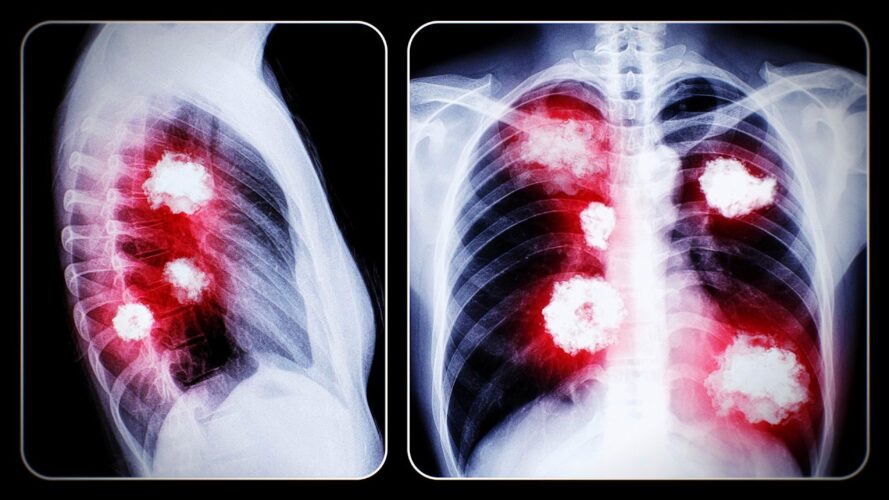
In the wide pantheon of tough jobs, your friendly neighborhood baker might not be the first thing that comes to mind. But pre-industrialization, bakers had one of the most strenuous, back breaking jobs you can imagine, which broke their bodies down aggressively. All this was exacerbated by the dreaded “Baker’s Lung,” a disease brought on by breathing in flour all day long. Today we’re going to talk about what is arguably one of the worst jobs of all time.
TRANSCRIPT:
There’s a picture we have of Victorian England. It’s mostly drawn from Sherlock Holmes, with a smattering of Christmas Carol thrown in. There were top hats, gas lamps, murder…and progress!
Progress is a good thing, usually. But in Victorian England, progress came in different forms. Some of those forms — let’s just say it’s not hard to see where Charles Dickens got his ideas.
Before we go further, let me mention that the reign of Queen Victoria lasted an unreasonably long time. It went on for nearly 64 years, from 1837 to 1901. Only the 70-year reign of Queen Elizabeth II makes that seem sane, and Lizzy holds the record for the second longest reign in history.
Why do I mention this? Because our Holmesian picture focuses on late Victorian times. The grimier world Dickens wrote about was earlier, and change was swift…from a historical perspective.
Actually living through them? That was different. Living and working after Dickens and before Sherlock, say late 1860s and ‘70s? Total nightmare.
It was in this period that industrial work in Victorian Britain exposed workers to fatal health risks, long before safety standards came in. Many of the dangers were cumulative, and they went largely unnoticeable in the early parts of people’s careers. It was only later that toxins, stress, and poor working conditions killed ‘em stone dead.
Surprisingly, it was bakers who suffered some of the worst effects. By bakers I mean breadmakers, since bread was most of what people ate. I mean that literally.
During the period we’re talking about, bread was the MVP of every meal. I actually can’t think of a modern comparison in the US except [something like pizza bites] in my house. But back then, having a meal without bread would be like skipping rice in Asia or tortillas in Mexico.
I’ll pause to let my Asian and Mexican viewers process that heresy. Ya good? Let’s continue.
Like I was saying, bread was most of what people ate in Victorian England. They started eating it at breakfast, so bakers worked through the night to meet demand. Of course, modern bakers do that too; the difference is that modern bakers use machines.
But wait, Joe! Wasn’t the whole point of the industrial revolution to give the Victorians machines, too? That’s true, but it took a long time.
Prior to 1860s and ‘70s, bakehouses were already cramped, hot, and poorly ventilated. Flour dust wreaked havoc on bakers’ health, giving them a form of occupational illness known as baker’s lung. During the 1860s and ‘70s, it got worse.
And that’s our story for the day. How the men who baked bread in late 1860s and ‘70s England died to feed the nation.
Life of a Baker
Bakers were a fixture of life in European forever. Long before the factories and railways of the Victorian Age, they were turning out bread in massive amounts. Bread was the staple, and baking was a respected trade with its roots in medieval guilds.
Traditional bakehouses were small, like I mentioned. More than a few were tucked into basements or back rooms, because most baking happened in a different location to where the bread was sold. Lots of these bakeries operated on a delivery model, with the younger bakers extending their hours by walking a delivery route.
Inside the bakehouse, work was divided by rank. A master baker ran the business, journeymen did the skilled baking, and apprentices handled the dirty jobs. The weekly pay for a baker looked better than that of an unskilled laborer, but that changes a little when you consider the hours they worked.
A typical worker of the time had a 6-day work week at 10 hours a day. That’s already brutal. Bakers, though, worked 18-20 hours 6-days a week.
A journeyman might make 16 shillings a week compared to the 6 shillings and six pence paid to a bricklayer. But remember, that bricklayer is working half the hours. Your journeyman baker brought in more money, but you’ve got to wonder when he had time to spend it.
Actually, the answer is known: on Saturday afternoons when he went to the pub. Victorian reformers wrote about the “dissipated habits” of bakers. This is ye olde for getting smashed on the half-day a week you weren’t expected to work or go to church.
Alright. Let’s talk about those working conditions for a minute. Bakers were tough. They were often called on to lift flour sacks that weighed hundreds of pounds.
They also kneaded dough by hand, usually shirtless because the work was tough. Sometimes, they kneaded by foot, also shirtless, in long troughs built to hold the weight of a man. Kneading could take hours, and there was minimal ventilation to carry away the heat and fumes from the ovens.
Ah, the ovens! They were small, which was good for helping the half-naked bakers not to pass out. But the size had an obvious downside since it meant they could only bake so many loaves.
Though, they managed somehow. The average bakery, pre-1860, was staffed by four men, including the boss — the master baker. These four guys turned out between 80 and 192 loaves every day but Sunday.
For comparison, if you do the math, the typical McDonald’s puts out around 7–8.5 kg of bread per day in buns. The loaves the Victorians were baking, multiplied by the output, adds up to between 145 and 350 kg of bread. Four guys, one oven, in an average Victorian bakery, were making between 20 and 47 times the bread sold by a modern McDonald’s.
It was exhausting and time consuming work. The dough had to rise, the ovens had to heat for hours to reach temperature. Every step of the process was physically and mentally stressful.
With all that in mind, how could it possibly have gotten worse? I can tell you in one word. Chemicals.
Death of a Baker
OK. Maybe two words. Because the chemicals were triggered by demand.
When industrialization happened, it pulled people into cities incredibly fast. Nowhere was this more evident than in the sprawling blob of a city called London. Quick aside: How sprawling are we talking about?
Modern London is spread across twice the land area of New York City. It has about a million more people, too, but at twice the size, they at least have room to stretch out. Victorian London was about one-sixth its modern size circa 1851.
By 1896 it was actually larger than it is today, a titanic 693 square miles. The population went from over 2 million in 1851 to over 6 million in the same period. Where did all these people come from, you may ask?
If you’re living in America and have any Irish ancestry, you already know the answer. The Great Famine of 1845-1852, which was mostly the English government’s fault, drove 200,000 Irish workers into the city and more overseas. If you want to learn about that, can check out my forgotten Atrocities series over on Nebula.
Now, 200,000 people is a far cry from 4 million. Some of the increase was from Indian immigrants. There was also a sizable population of Jewish people who made London their home in the mid-Victorian Age.
Quite a few more people moved to the city for economic opportunities in mechanized industries. Hold on to that statement, it’ll be ironic in a minute. First I want to mention what all the people of London had in common in the 1850s through 1890s.
Bread. They ate bread. They ate so much bread.
To give you an idea how much bread we’re talking about, the average London working man of the time needed to eat around 6000 calories per day. I have personally never eaten 6000 calories in a day. I’m not sure I’d live.
Victorian Londoners ate most of their calories in bread. Your typical working man ate three meals a day. Breakfast was a thing, lunch wasn’t so much, though afternoon tea was, eventually.
The biggest meal of the day was dinner. It could happen at midday, which is why they didn’t need lunch, or it could happen after working hours. People also ate supper, which was a late night snack.
A working man might have bacon with his breakfast. He might have potatoes or a bit of meat at dinner and cheese at supper to give him weird dreams. The other two thirds of each plate and more than two thirds of his calories?
Say it with me, boys and girls: Bread.
The consequence for the bakers was that they had to go from working like dogs to working like bulls. Somebody had to make all that extra bread. And the crazy thing is, they had to make it under the same conditions and using the same techniques as before the industrialization.
4 men. One oven. Everything kneaded, scaled, and baked by hand. The irony here, the joke on bakers, is that the industrial revolution seems to have come to every other other industry first.Widespread mechanization didn’t hit baking until the 1860s and it didn’t become widespread until the 1880s. Most bakehouses were too small for machinery. Most bakehouse owners were too cheap to pay
This meant that in the 1860s and ‘70s, bakers had to make more and more and more bread using the same labor. Just about the only way they could do it was introducing additives. You’ve heard of better living through chemistry? This was the opposite.
Now, to be fair, it wasn’t only the bakers who adulterated their products. The millers often adulterated the grain they provided. This meant that bakers worked with double-adulterated ingredients.
What kinds of adulterants are we talking about? Chalk was common, as was plaster. There were stories of bakers adding ground bone to flour.
But the worst adulterant, also the best so far as the bakehouse owners were concerned, was alum. This was a chemical that was usually made by exposing aluminum sulfate to sulfuric acid. If that doesn’t sound delicious to you, you’re right.
Alum did nothing for the flavor, but it did retain water, making it possible to bake heavier loaves for less money. It also served as a bleaching agent. Londoners were suckers for bleached bread.
All the adulterating added up to a lower-quality product, but also a more profitable one. Some London bakeries of the 1860s and ’70s survived by making the same amount of bread as before, that good old 20-to-47 McDonald’s worth now adulterated for their pleasure. But many bakehouses also increased their traditional output, some truly insane operations going so far as to drain 3 large sacks of flour per day.
That amounts to 476 kg of bread per day, six days a week, a total of 2.85 metric tons of bread. In modern terms, the same four-man teams were making 64.7 times as much bread as is sold in an average McDonald’s!
The result of this overwork…was death. Many bakers died gasping for air due to lung diseases caused by flour dust and alum. Did I mention they slept in the bakehouse and were locked in for the night?
The average age at death a mid-Victorian baker was 49. I’m sure that sounds ancient to some of you. To me it sounds far too young.
And remember, they died after decades of backbreaking labor and trouble breathing. Oh! And they had skin diseases, too. The big one was irritant contact eczema, brought on by keeping hands in the dough too long and washing their hands.
At least the cause of the eczema was hygiene. The baker’s lung that killed them? That was caused by the greed and indifference of owners.
The Perils of Flour
Just so we’re clear, bakers didn’t often drop dead at work. Baker’s lung is a slow killer, which helps explains why so many of its victims stayed in the game when they’d already lost. The threat of poverty explains it too, but that’s a different video.
Picture the scene: four men in a range of ages, none older than 49. They work all night, resting and sleeping on the bakehouse floor or on a table in the same room, constantly breathing flour dust and toxins. The younger bakers take breaks to make deliveries, then everybody gets back to work for most of the rest of the day.
Whenever the flour gets tipped or sifted or kneaded or cleaned up, more dust enters the air. Even today, bakers are advised to use wet cleaning methods on flour or an industrial vacuum. Swirling flour particles are no bueno, even when they’re not chemically altered.
See, flour dust isn’t just ground wheat. It contains starch particles, fungal spores and enzymes that are small enough to bypass the body’s defenses. Additives made this worse in Victorian times as they still do today, but even “pure” flour can cause chronic inflammation when inhaled over time.
Think about it. When you eat bread you break it down with stomach acid. Even then, some irritants survive. How do you think your lungs would fare?
Symptoms of baker’s lung, also called baker’s asthma, include coughing, wheezing, and tightness of the chest. There’s a steady worsening of the ability to breathe. Regular asthma can lead to body aches from the muscles being recruited to aid the lungs, so you’ve got to figure the persistent coughing of baker’s asthma would come with back pain.
But again, few bakers in Victorian England seem to have quit their jobs. They kept working and drinking away their woes until they couldn’t do it anymore. Then they took a trip to the seaside if they could afford it…declined slowly in bed… and died.
Mortality got worse before it got better because of those additives. Alum supercharged the killing dust because heated, alum-treated flour puts out extra irritants and fumes. This means bakers soaked in a death sauna during the longest parts of their workday.
They slept in that sauna. They ate the alum bread. I’m impressed these guys made it to 49!
By the late 19th century, doctors and reformers had noticed the pattern. They knew bakers died younger than men in other trades. Respiratory failure after years of breathlessness was the all-too-common cause.
Citizens campaigned. The government responded, eventually. What exactly changed?
Down With Basement Bread
The turning point came in 1863, when Parliament passed a new sanitation law specifically aimed at bakehouses. It didn’t cure baker’s lung — that’s still around — but it did create a legal lever reformers could pull. And pull they did, though bureaucratic delays meant it took a decade and a half before the changes locked in.
This was partially because the 1863 Bakehouse Regulation Act put enforcement in the hands of local officials. Supervision then bounced between agencies for years. Finally, Parliament made bakehouse oversight part of broader factory-and-workshop inspection measures.
The reforms were widely enforced circa 1878. Enforcement went back to local officials in 1883, but by then the owners knew someone was watching. Improvements happened.
One that was a huge help to bakers was the rule that made them sleep somewhere other than inside the death sauna. This cut down the time they spent breathing fumes. Ventilation was another leap forward.
The Factory and Workshop Act of 1901, Queen Victoria’s last year, specifically called this out. But by that year efforts were underway to improve or eliminate underground bakehouses. I’ve got to say, the idea of eating bread prepared by sweaty men in an airless dungeon does kind of spoil the mood.
Legally speaking, bakehouses can still operate in basements, but these are nice basements. They get checked by Health and Safety inspectors. So no more death saunas and a lot less sweat in the bread.
I want to call out a hero here. Hugh Seymour Tremenheere (TREM-en-heer) was a barrister and academic who also inspected schools and mines. He was commissioned to audit the conditions of bakehouses and absolutely smashed it by exposing how nasty the places that supplied everybody’s bread habit actually were.
Some highlights from his 1862 report and associated testimony include: Bakehouses being “infested with rats, beetles, and cockroaches” The additives being “deleterious” — great word And the average age of a baker being around 42, since so many bakers clocked out before 50
Around the same time as Tremenheere was delivering his inconvenient truths, a Scot named John Dauglish was pushing reform by making a better application of chemistry than the additive-happy millers and bakery owners. He invented a process to pound CO2 into dough with a machine. In 1862, he founded the Aerated Bread Company.
This radically changed the baking industry, though again, it took time for the changes to sink in. Aerated bread is bread with no yeast, just bubbles from the CO2. It’s fluffy and white, but doesn’t taste like much, which is another reason it didn’t take off immediately.
But finally, finally, other mechanical methods did. The mechanical dough mixer was a game changer. Instead of hours of hand-and-foot kneading, machines could do the job quickly and consistently, while fewer humans had to marinate in flour dust.
The critical dates for the dough mixer are 1873, when a “universal mixer” was introduced to Britain from Germany… And 1901, when the manufacturer Joseph Baker & Sons began selling one attached to an electric motor.
Before that, the job of bakers got a bit better when bread tins and pans started getting commonplace. This began in the mid-19th century and helped sanitation by leaving less charred dough. The bakers didn’t have as much to clean up or breathe it in, which was a help.
Long story short, change was messy when it came to Victorian bakehouses. Reformers, government, and mechanization all played their part. The tragedy is that so many bakers died gasping while owners ignored the problem and bureaucrats dragged their heels.
It’s amazing to think how long it took for society as a whole to recognize how damaging it is to treat humans as disposable. Thankfully, we learned. Right?
Other Occupational Illnesses
Well, there were lots of dangerous jobs that treated workers poorly in the past, so saying there are fewer now is faint praise. The classic comparison to baker’s lung is grinders’ asthma.
And by “grinder” I mean the knife grinders of Sheffield. These were folks who spent years leaning over grinding wheels, breathing in metal dust. The result was later understood as a form of silicosis.
The disease killed thousands of cutlery makers in the Sheffield area, which was home to a thriving industry. And when did most of these cutlery makers die? Before 50 years old.
Significantly, it wasn’t only “metal dust” that burnt up their lungs. Some of the danger came from the abrasives and stone used in the grinding process. Workers inhaled steel and mineral particles that scarred their lungs over time.
A similar disease popped up in 2022, when some engineered-stone countertop workers developed silicosis. Their condition was also reminiscent of black lung disease, the bane of mining workers. Black lung is a form of pneumoconiosis, not silicosis, and is probably the best named of all the occupational diseases.
Take a slice of bread from a Victorian bakers, char that sucker to a crisp, and that’s what thousands of miner’s lungs looked like when they died. Black lung still results in tens of thousands of deaths per year. It’s not that miners get hit with the disease and die; it takes time.
Life expectancy for a miner, btw? It varies in the US from 58 to 68. In some parts of China it’s under 50 years.
The hide-in-plain-sight entry on this list has to be workers who make regular use of bleach. Chlorine bleach and related disinfectants are strongly linked with respiratory symptoms. There’s debate about whether this leads to asthma, or if the symptoms are so similar they mess with the asthma statistics, but in terms of human suffering, neither one is great.
One asthma-like condition triggered by exposure to chlorine bleach is reactive airways dysfunction syndrome. After an acute chlorine exposure, RADS symptoms can persist for months or years. There are many lessons we could take from our look into occupational illnesses like baker’s lung. One is that Victorian bakers weren’t weak or unlucky. They were one class of workers out of many who suffered to put food on the table.
Their tragic tale is a chapter in a book about people dying to do a job. The last chapter of that book has yet to be written. Be careful out there.



Add comment